Energy and process instability
Fixed-speed pumps can waste energy and create pressure swings when demand changes.
Open a VFD conversation when the customer mentions throttling, variable demand, pressure control, or energy reduction.

Water, wastewater, building, and industrial process
Control and protect pump motors while improving uptime, energy use, operator visibility, and panel standardization.
Application map
Explore where Eaton ICD components support power, control, indication, and field connectivity.
Sales Playbook
Application overview
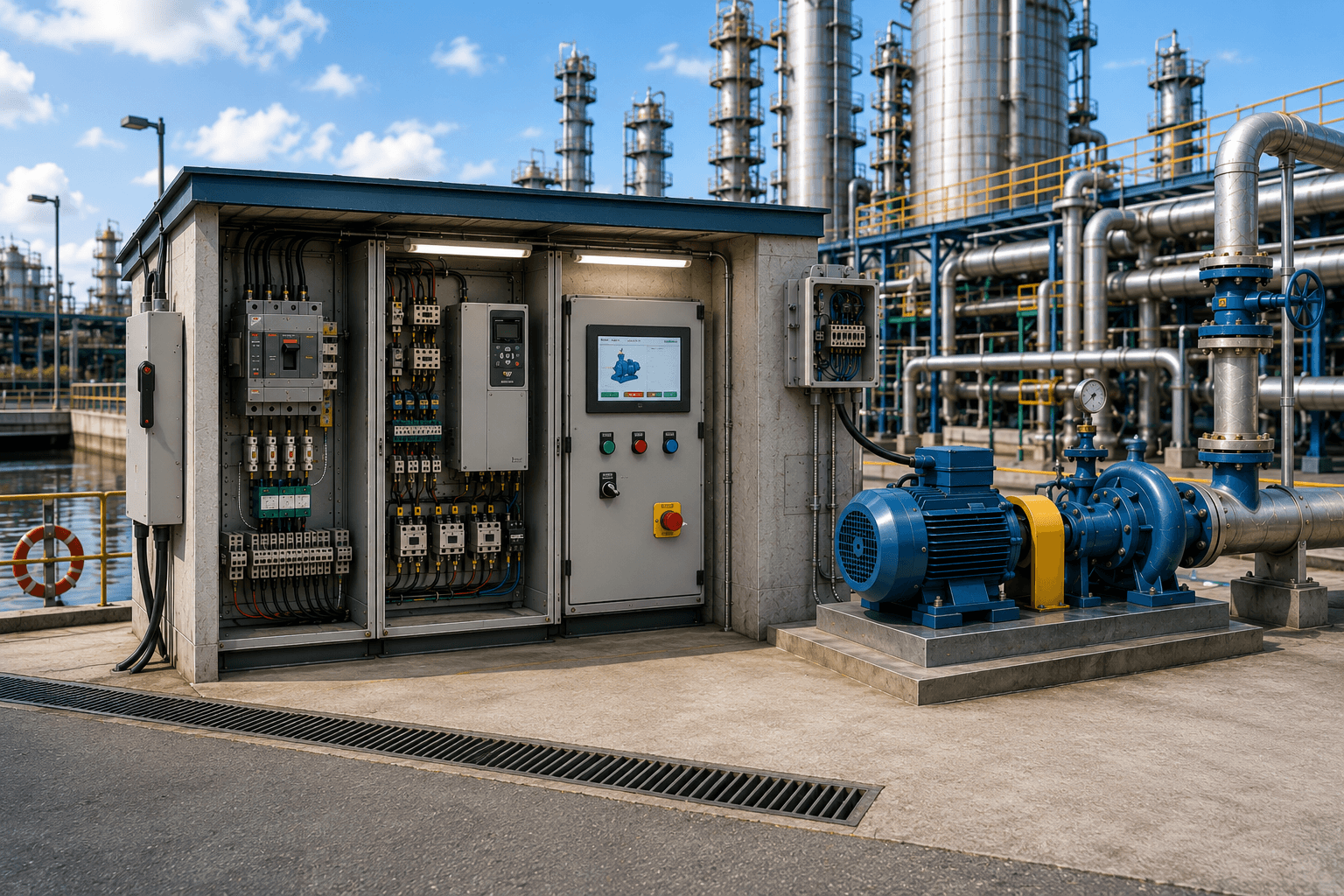
Pumping systems are a strong entry point for ICD because the conversation naturally connects motor control, local operator interface, control panel components, and serviceability. The sales motion should start with the pump job, then move into speed control, protection, indication, and panel build requirements before any final product selection.
Customer context
Commercial triggers that help position ICD product families before detailed engineering starts.
Fixed-speed pumps can waste energy and create pressure swings when demand changes.
Open a VFD conversation when the customer mentions throttling, variable demand, pressure control, or energy reduction.
Across-the-line starts can increase stress on motors, couplings, pumps, and electrical infrastructure.
Compare soft starters and VFDs after confirming whether speed control is actually required.
Operators and maintenance teams need quick status, fault, and mode information at the panel.
Bring pilot devices, relays, and panel labeling into the discussion early.
Pump panels are often repeated across sites, skids, or treatment trains, but component choices vary by builder.
Position terminal blocks, relays, starters, and pilot devices as a standard panel platform.
Recommended architecture
A practical path for turning application context into a starter product-family recommendation.
Confirm whether the pump is constant speed, variable demand, lead-lag, standby, or part of a packaged skid.
Use VFDs when speed or pressure control matters, soft starters when reduced-voltage starting is enough, and starters for straightforward switching.
Add HOA control, status indication, signal isolation, and interposing relays around the selected motor-control approach.
Use terminal blocks and a repeatable wiring approach so distributor and panel-builder teams can quote and support the package.
Starter BOM
A structured starting point for distributor or panel-builder conversations. Technical validation is still required.
| Line | Product family | Role | Validate before quote |
|---|---|---|---|
| Motor control | Variable frequency drives or soft starters | Match pump duty to speed control or reduced-voltage starting. | Confirm motor horsepower, voltage, enclosure, bypass, and harmonic or service requirements. |
| Motor switching | Contactors/starters | Support across-the-line control, bypass, or starter panel requirements. | Validate horsepower rating, overload approach, duty cycle, and coordination expectations. |
| Operator interface | Pilot devices | Provide HOA, start-stop, reset, run, fault, and local status indication. | Confirm environment, panel cutout standard, legend needs, and maintained versus momentary action. |
| Signal interface | Relays | Isolate remote starts, alarms, permissives, and control interlocks. | Confirm coil voltage, contact count, load type, and socket or plug-in preference. |
| Wiring system | Terminal blocks | Organize field wiring for level switches, pressure signals, alarms, and service work. | Confirm wire size, labeling approach, grounding, and field wiring count. |
Sales call prep
Use these questions to keep the discussion grounded in application requirements and validation needs.
Is the pump fixed speed or variable speed?
What motor horsepower, voltage, and enclosure requirements should be considered?
Is the customer trying to reduce energy, reduce mechanical stress, improve uptime, or standardize panels?
Does the site need HOA control, local indication, alarm outputs, or remote start contacts?
Who validates the final engineered design: end user, panel builder, OEM, or consulting engineer?